
OperationsUpdated 8 min read
Automation workflow: fix the process before you scale it
A practical order for cutting manual work: stop automating chaos, score volume and rules, prioritize by impact vs effort, then build with owners and maintenance in the budget.
workflow automationprocess designoperationsTCOprioritization
Reckap Team
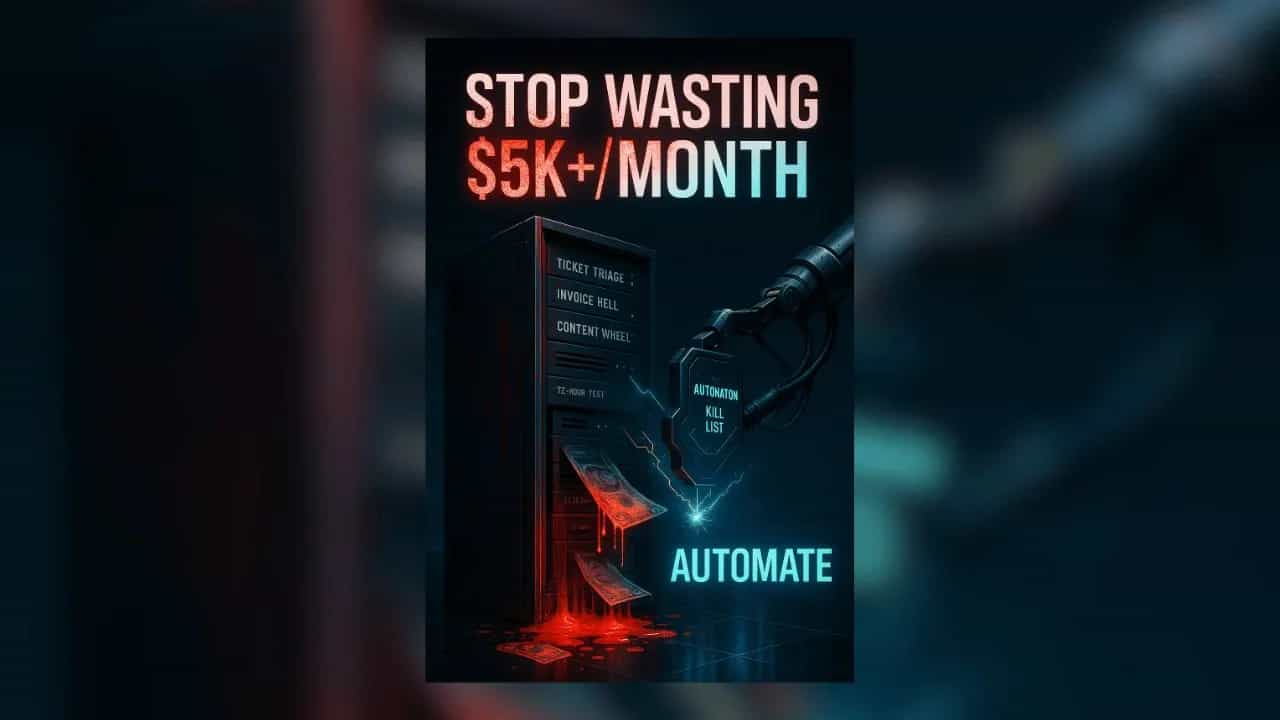
Most automation waste comes from speeding up a messy process. Reckap’s working order is the same one operations teams use when the goal is fewer handoffs and clearer ownership: standardize, simplify, then automate. This guide replaces the old flyer-style post with a checklist you can run in a week.
Step 0 - Stop automating chaos
Automating a broken process just makes the wrong work faster.
Before tools, write down:
- Who owns the queue end to end
- What "done" looks like for one item
- Where exceptions go today
- Which steps are optional folklore vs required policy
If those answers disagree across people, you have a process problem - not a Zapier problem.
Three non-negotiables for early candidates
- Volume: enough repetitions that savings compound (often 50+ similar items per month as a starting filter).
- Clear rules: you can write if X then Y without a senior debating every case.
- Low judgment load: an intern with a checklist could finish most items correctly.
Step 1 - Find the cash bleed
Common early candidates: ticket triage and tagging, invoice or claim data entry, status updates across systems, and content repurposing with a fixed template. Pick one queue you can observe this week.
bleed-estimate.txt / text
monthly_bleed ≈
 (minutes_per_task / 60) × frequency_per_month × loaded_hourly_cost
 + (error_rate × cost_per_error)

Example (illustrative only):
0.25h × 80 × $80 + (0.10 × $200) ≈ $1,780 / month baselineStep 2 - Diagnose readiness
Readiness checklist
- Happy path documented in under one page
- Decision rules written as if-then statements
- Top exceptions listed with owners
- Systems of record named (who writes truth)
- Baseline time and error rate measured for one week
Step 3 - Prioritize with impact, effort, readiness
| Low effort | High effort | |
|---|---|---|
| High impact + ready | Do next | Plan as a funded project |
| High impact + not ready | Standardize first | Standardize first - do not build yet |
| Low impact | Backlog or delete | Do not automate |
Crawl walk run
- Crawl (weeks 1-2): one workflow, thin volume, human review on exceptions
- Walk (month 2-3): error handling, logging, clearer ownership
- Run (month 4+): only then consider predictive or AI-assisted steps
Step 4 - Build without blowups
Light volume / clear APIs
iPaaS (Zapier, Make, or similar) can prove the path quickly when rules are stable and volume is modest.
Complex logic / scale
Custom services (for example Python workers + your app stack) when branching, audit needs, or volume outgrow no-code.
72-hour validation sprint (example shape)
- 1
Day 1 - Parse and classify
Take a real sample set. Prove the system can label or extract the fields that matter, with a human spot-check.
- 2
Day 2 - Route risk and exceptions
Send uncertain or high-risk items to a named queue with full context. Measure false positives and misses.
- 3
Day 3 - Write back to the system of record
Create or update the ticket, invoice, or CRM record. Confirm owners can open failures without paging the builder.
Step 5 - Scale with KPIs and TCO
- Fewer handoffs per completed item
- Shorter time to resolution or cycle time
- Lower rework and exception rate
- Clear audit trail for AI-to-human handoffs when used
Simple TCO sanity check
Compare multi-year cost of build + infra + maintenance against multi-year savings from the baseline bleed formula. If the ratio is weak, simplify the process further or pick a smaller slice before you scale the stack.
Security basics before go-live
- Know where data is stored and retained by vendors
- Mask or minimize PII before any model call when possible
- Keep audit logs for automated actions and human overrides
Ways to implement
Delivery options
Pros
- DIY with your stack when the workflow is simple and owned in-house
- Hybrid: Reckap builds the first path, your team runs it
- Done-with-you when errors or compliance make DIY risky
Cons
- Buying a bot before the process has rules
- Skipping ownership and runbooks at handoff
- Scaling predictive features before crawl KPIs are green
Want a crawl-walk-run map for your top three cash-bleeding tasks?
Book a callFAQ
- What should we automate first?
- Start with a ready workflow that repeats often, follows clear if-then rules, and does not need deep judgment. High impact with low effort and clear ownership beats a politically loud project.
- How do we know a process is ready?
- You can write decision rules, name inputs and outputs, list common exceptions, and run the happy path with a short checklist. If seniors still say "it depends" without criteria, fix the process first.
- How should we estimate the cost of manual work?
- Use a simple bleed formula: time per task times frequency times loaded hourly cost, plus error rate times cost per error. Treat the number as a baseline for decisions, not a marketing claim.
- When do we add AI to the workflow?
- After the path is stable and measurable. AI helps when classification or drafting is the bottleneck - and only with a human fallback, an evaluation set, and an owner for drift.
- What does Reckap include in a technical blueprint?
- A short session to name the top cash-bleeding tasks, check readiness, and map a crawl-walk-run automation path with owners - before anyone writes production code.